San Luis Obispo County Wildlife Wonders
of the Oak Woodlands
Portfolio
Common Name
Bobcat
Scientific Name
Lynx rufus
If you’re walking through our local oak woodlands, especially during twilight hours, you might spot this fuzzy creature and think it is just another stray cat on its own adventure. However, this is no ordinary house cat! You have spotted a bobcat! You might ask, how do you know it’s a bobcat? Well just look at the purrr-fect sense of style!
Bobcats are almost twice the size of most common house cats. They have a short ( or bobbed) black tipped tail which is how they got they got their name. Bobcats have brown or reddish (like rust) fur with black or dark brown spots and stripes. Bobcats are known for their tufted ears as well as the long hairs that sprout from each side of their head.
Can you spot these unique characteristics in the photos to the left?
Local Notes
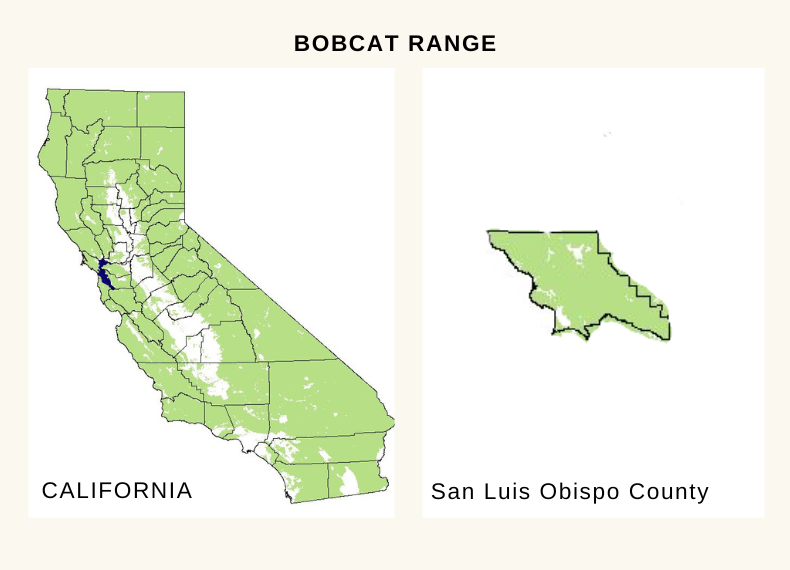
Although bobcats can be found in a variety of habitats, the oak woodlands of San Luis Obispo County provide the types of shelter and prey animals that bobcats prefer. Woodlands include brush piles, tree cavities, and rocky hideaway areas for shelter. Other local plant communities including oak grassland, chaparral and coastal scrub provide homes for bobcat prey animals as well as hiding places for the predator. Oak woodlands are also notable for their connections to riparian ecosystems connecting wildlife to valuable sources of water.
Increased human activity in our local areas such as housing and agriculture destroys valuable areas bobcats use for dens and hunting. This can force bobcats to look for alternative food sources often having to turn to livestock. As people in these communities, it is our responsibility to balance our own needs with that of wildlife.
What’s in my lunchbox?
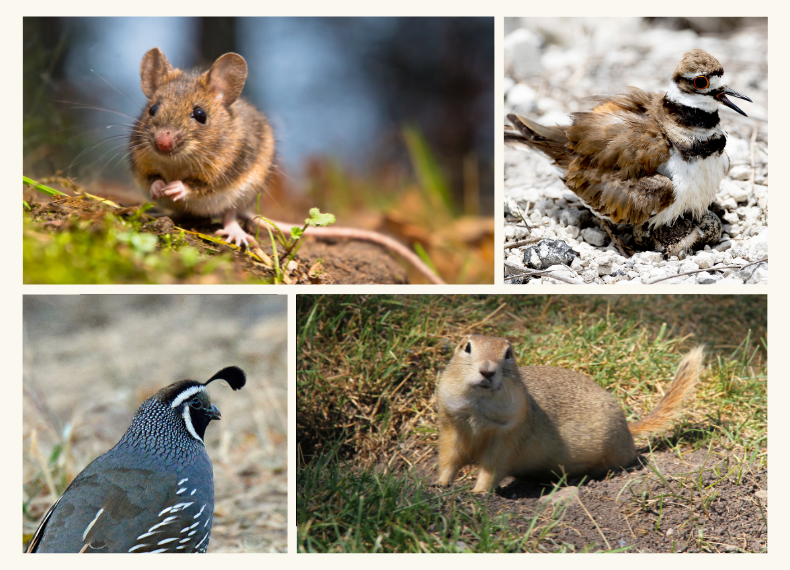
The bobcat is a carnivore. This means that it hunts animals and eats only meat. That’s right, no veggies for these cats. Bobcats mainly eat rodents, rabbits or hares, small birds, and some reptiles. They occasionally take down small deer or livestock when desperate for food.
Bobcats are master hunters with the right tools for the job. In order to sneak up on prey, their coat patterns act as camouflage blending in with their surroundings. Their paws which are like soft landing pillows, allowing them to quietly sneak up on prey. Once ready to pounce, bobcats have teeth and claws designed to take down prey with relative ease.